
Diwali 2026: Authentic Kashmiri Gifts from Kashmir Store — From GI-Tagged Saffron to Handcrafted Heritage
Diwali 2026: Give a Gift with a Story — Authentic Kashmiri Treasures Arrive at Kashmir Store
By: Kashmir Store | August 2026
Srinagar: Diwali gifting has changed. The traditional box of sweets still has its place, but increasingly, shoppers are looking for something more personal — a gift that feels distinctive, useful and connected to a place, a craft or a story.
That is where Kashmiri gifts have an unusual advantage.
A small box of saffron can carry the aroma of Kashmir’s saffron fields. A packet of walnuts connects the recipient with the Valley’s agricultural traditions. A beautifully finished papier-mâché piece brings centuries of decorative craftsmanship into a contemporary home. And a genuine Pashmina, when properly certified, represents one of Kashmir’s most recognisable textile traditions.
For Diwali 2026, Kashmir Store is positioning its collection around precisely this idea: bringing the character of Kashmir to festive gifting without making every purchase a luxury splurge.
Its current online catalogue spans herbs and spices, gourmet foods, dry fruits, apparel, papier-mâché, décor and other Kashmiri products, while the store says its marketplace model aims to connect customers with local products and artisans.
The result is a gifting proposition with several price points — from relatively inexpensive handcrafted décor and food products to more premium textiles and carpets.
And there is an important distinction worth making before shopping: “Kashmiri” and “GI-certified” are not interchangeable terms. GI registration applies to specific products meeting defined geographical and production specifications. Kashmir Saffron, for example, is a registered GI, as is Kashmir Pashmina. Other products may be Kashmiri without carrying a GI certification.
That distinction makes authenticity more meaningful, not less.
Why Authentic Kashmiri Gifts Are Emerging as a Diwali Favourite
Festive gifting is becoming less about the biggest-looking box and more about what is inside it.
Consumers increasingly want gifts that can be eaten, used, displayed or remembered. Kashmiri products naturally fit that mood because the region’s traditional economy brings together food, textiles, woodwork, paper crafts and other forms of handmade production.
Kashmir Store describes itself as a marketplace for handmade, vintage, ethnic, organic and natural products from Kashmir, with a stated aim of connecting local artisans and designers with customers.
That gives Diwali shoppers a broader palette than the usual festive catalogue.
Instead of choosing one generic corporate hamper for everyone, businesses can consider smaller combinations:
Saffron + dry fruits + Kashmiri tea for a traditional food hamper.
Papier-mâché décor + dry fruits for a home-focused gift.
Kashmiri craft + gourmet product for clients who appreciate handmade products.
A premium shawl or textile for senior executives, family members or important business relationships.
The idea is simple: gift the culture, not merely the packaging.
01. Kashmir Saffron: A Small Gift with Extraordinary Character
Few Kashmiri products have the instant recognition of saffron.
Known locally as kesar, Kashmir Saffron received Geographical Indication registration in 2020. The official GI record lists the Agriculture Production Department of Jammu & Kashmir as the applicant and identifies Jammu & Kashmir as the geographical area.
The Pampore region, often associated with Kashmir’s saffron cultivation, gives the spice an especially strong place in the Valley’s cultural and agricultural identity.
For Diwali, saffron also has a natural gifting advantage. It is compact, premium-looking and versatile. It can be used in festive desserts, rice preparations, beverages and traditional recipes.
Kashmir Store currently lists 1-gram saffron among its herbs and spices, with the product page describing it as sourced from Kashmir and associating it with Pampore.
That makes saffron particularly attractive for shoppers looking for an easy-on-the-wallet premium gift.
A small quantity can become the centrepiece of a thoughtful hamper rather than simply another item in a large box.
What buyers should check
The word “Kashmiri” alone should not be treated as proof of GI certification.
For buyers specifically seeking GI-certified saffron, look for appropriate certification, traceability and seller documentation rather than relying solely on packaging language. The official GI registry is the strongest reference for the status of a GI product.
02. Pashmina: The Luxury Gift That Needs a Little More Attention
If saffron is Kashmir’s aromatic calling card, Pashmina is its textile signature.
But Pashmina is also where Diwali shoppers need to be particularly careful.
Kashmir Pashmina is a registered Geographical Indication, and the Craft Development Institute explains that the GI specifications include hand-woven fabric made by artisans in Jammu & Kashmir, using hand-spun yarn and 100% Pashm fibres meeting the specified requirements.
The government-backed Pashmina testing and certification ecosystem has also evolved. The Craft Development Institute operates a Pashmina Testing and Quality Certification Centre, while the Wildlife Institute of India says its Pashmina Certification Centre uses testing and traceable unique identification tags for certified products.
So when shopping for a genuine Pashmina gift, certification matters.
Interestingly, Kashmir Store’s current catalogue lists a Kani Shawl – Semi Pashmina, rather than representing it simply as pure GI-certified Kashmir Pashmina.
That is an important distinction for consumers.
For shoppers who want an elegant festive gift at a lower price than a premium certified Pashmina, a semi-Pashmina or Kashmiri-embroidered textile may offer a more accessible alternative.
For shoppers specifically seeking GI-certified Kashmir Pashmina, however, they should verify the certification of the individual product.
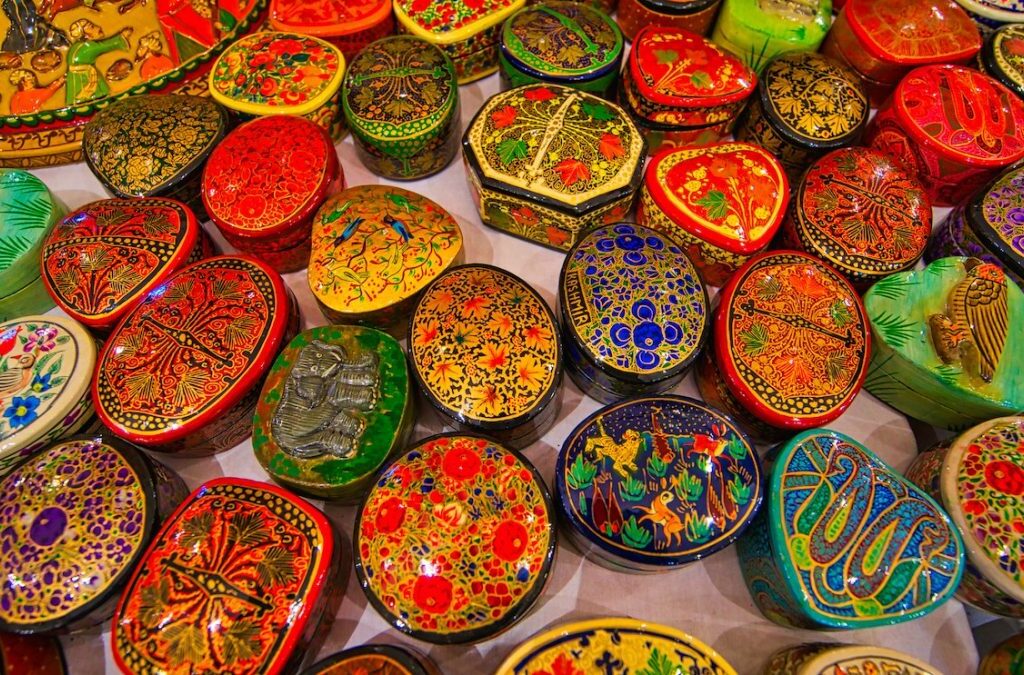
03. Papier-Mâché: Kashmir’s Colourful Answer to Diwali Décor
Diwali is a festival of light, colour and decoration, making Kashmiri papier-mâché a particularly natural fit.
The craft transforms relatively modest materials into highly decorative objects — boxes, hanging pieces, holders, ornaments and other home accents.
Kashmir Store currently lists a dedicated papier-mâché category, including coaster sets, hanging bells, decorative eggs, holders, pin boxes, tissue boxes and flower vases. Several items are listed in the few-hundred-rupee range, making them particularly suitable for smaller festive gifts.
For urban homes, this can be a refreshing alternative to mass-produced festive décor.
A hand-finished object has something factory-made decoration often lacks: individuality.
It also works well as a corporate gift because it is relatively easy to package, display and transport.
The Craft Development Institute notes that its certification centre covers several GI crafts, including Kashmir Paper Machie and Kashmir Walnut Wood Carving, alongside Kashmir Pashmina and other crafts.
Again, the key is to distinguish the craft tradition itself from certification of a particular product.
04. Kashmiri Walnuts and Dry Fruits: The Gift That Rarely Goes Unused
There is a reason dry fruits remain such a dependable Diwali gift.
They are festive, familiar, easy to share and suitable for almost every age group.
Kashmir Store’s current dry-fruit catalogue includes almonds, walnut kernels, walnuts, dried apricots and dried figs.
Its walnut-kernel listing, for example, currently shows a 750-gram product with an online price displayed at ₹1,200 at the time of checking, although festive prices and availability can change. The store says it offers shipping across India.
That makes dry fruits one of the more practical routes into budget-friendly Kashmiri gifting.
They can also become the foundation of a personalised hamper:
Option A — Everyday Diwali Gift:
Walnuts + almonds + dried fruit.
Option B — Kashmir Food Hamper:
Walnuts + saffron + Kashmiri tea.
Option C — Premium Corporate Hamper:
Saffron + selected dry fruits + handcrafted décor.
Instead of chasing the biggest hamper, businesses can build smaller, more purposeful combinations.
05. Kashmiri Handicrafts: When the Gift Becomes Home Décor
The strongest Kashmiri gifts do not necessarily have to be expensive.
A beautifully crafted small object can sometimes create more impact than a large commercial hamper.
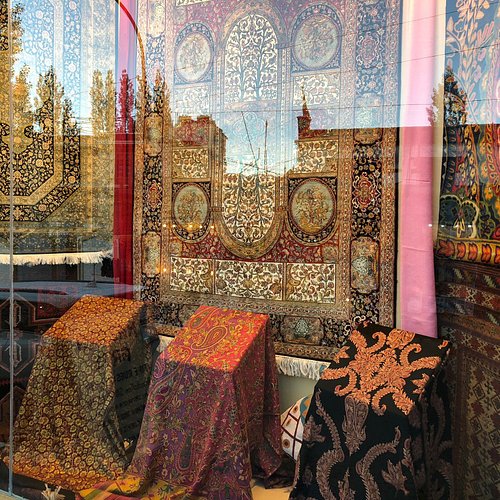
Kashmir Store’s catalogue currently includes papier-mâché products, Kashmiri embroidery, carpets, copperware and other décor-oriented products. Its website also lists hand-knotted Kashmiri silk carpets among its featured offerings.
For Diwali, these products have an obvious advantage: they become part of the recipient’s home.
A decorative box can sit on a console.
A handcrafted ornament can become part of a festive display.
A carpet can become a long-term household investment.
A traditional copper Samovar can become a conversation piece.
In other words, the gift does not disappear after Diwali dinner.
Budget-Friendly Does Not Have to Mean Cheap
There is an important difference between cheap and affordable.
Cheap describes price.
Affordable describes value.
That distinction is central to the Kashmir Store proposition for Diwali 2026.
The store’s current catalogue includes smaller papier-mâché pieces priced from around ₹175–₹475, saffron listed at ₹349 for 1 gram, dry fruits at several price points and a semi-Pashmina Kani shawl currently displayed at ₹10,000 after a listed discount. Prices and availability should, of course, be checked at the time of purchase.
This creates room for different gifting budgets.
For individual shoppers
A small saffron pack, dry-fruit selection or papier-mâché item can make an affordable Diwali present.
For families
A mixed hamper can combine food and craft.
For premium gifting
A quality textile or handcrafted décor piece can become the centrepiece.
For corporate gifting
Businesses can create tiered hampers according to client category, employee seniority and budget.
The smarter strategy is not to make every gift expensive. It is to make every gift intentional.
The GI Tag Question: What Diwali Shoppers Should Actually Know
The term GI-tagged has become increasingly visible in conversations around Indian handicrafts and regional foods.
But a GI tag is not a blanket seal applied to everything produced in a particular state.
A Geographical Indication identifies goods associated with a particular geographical origin and whose qualities, reputation or characteristics are linked to that origin.
For Kashmir, some important examples include:
- Kashmir Pashmina
- Kashmir Saffron
- Kashmir Paper Machie
- Kashmir Walnut Wood Carving
- Kani Shawl
- Kashmir Sozni
The Craft Development Institute currently identifies several of these crafts within its GI testing and certification work, while official GI records separately confirm the registration of Kashmir Pashmina and Kashmir Saffron.
For consumers, the lesson is straightforward:
Don’t buy the word “GI”. Buy the certified product — and verify the certification when authenticity is important.
The District Srinagar administration similarly advises buyers to purchase from recognised emporiums or registered sellers, verify GI certification where applicable, request authenticity certificates and proper billing, and be cautious when premium products are offered at unusually low prices.
That is especially relevant when buying Pashmina.
From Srinagar to Your Doorstep: The Convenience Factor
The romance of Kashmiri products has traditionally been tied to travelling to Kashmir, walking through Srinagar’s markets and discovering crafts directly from shops and artisans.
Online commerce has changed that equation.
Kashmir Store describes itself as an online marketplace designed to make Kashmiri products accessible to customers beyond the Valley. Its current catalogue spans food, spices, clothing, crafts and décor, and individual product pages indicate India-wide shipping on several products.
For Diwali shoppers, this matters because festive gifting has a deadline.
A beautifully chosen gift is of little use if it arrives after the celebration.
Customers should therefore check current stock, delivery estimates, return terms and destination-specific shipping timelines before placing larger corporate or family orders.
A Diwali Gift Guide for Every Budget
Under ₹500: Small but Memorable
Consider:
- 1-gram saffron
- Papier-mâché holders
- Coasters
- Decorative pieces
- Kashmiri tea or selected spices
Kashmir Store’s current catalogue shows several options in this bracket, including papier-mâché products and saffron.
₹500–₹1,500: The Everyday Premium Hamper
Consider:
- Walnuts
- Almonds
- Dried fruits
- Saffron
- Kashmiri gourmet products
Current listings show several dry-fruit products in this broad range.
₹1,500–₹5,000: A More Personal Gift
Consider combining:
- Saffron
- Premium dry fruits
- Handcrafted décor
- Embroidered accessories
- Selected Kashmiri textiles
₹5,000 and Above: Heritage Gifting
For premium recipients, consider:
- Shawls and textiles
- Larger handcrafted décor
- Carpets
- Curated multi-product hampers
The emphasis should be on quality and authenticity rather than simply price.
Corporate Diwali Gifting: Why Kashmir Works
For companies, the challenge is different.
A corporate Diwali gift needs to look premium without becoming predictable. It must be practical enough for employees and clients, but distinctive enough to be remembered.
Kashmiri products offer several ways to achieve that balance.
A saffron-and-dry-fruit hamper is compact and universally usable.
A handcrafted papier-mâché item adds cultural identity.
A premium textile can serve as a high-value executive gift.
A mixed hamper can tell a more complete story about Kashmir.
And for organisations pursuing a stronger local-artisan narrative, handmade products can help move corporate gifting away from anonymous mass production.
The strongest corporate presentation may therefore be:
One product people consume.
One product people use.
One product people keep.
That combination turns a hamper into an experience.
Why Kashmir Store’s Festive Proposition Stands Out
Kashmir Store says its marketplace model is intended to connect local artisans and designers with customers while helping preserve traditional products and livelihoods.
That positioning gives its Diwali campaign a story beyond discounting.
The current catalogue reflects that breadth — saffron and spices on one side, dry fruits and gourmet foods on another, and textiles and traditional crafts elsewhere.
It is this combination that makes the store particularly relevant for shoppers who want their Diwali gifts to feel less generic.
The proposition is not simply:
“Buy something from Kashmir.”
It is:
“Choose something that carries a piece of Kashmir with it.”
Before You Buy: A Smart Shopper’s Authenticity Checklist
Before ordering expensive Kashmiri products for Diwali 2026, keep five things in mind:
01. Check exactly what is being certified
GI status applies to defined products and specifications. Don’t assume every product carrying a “Kashmiri” label is GI-certified.
02. Ask for certification where relevant
This is particularly important for premium Pashmina.
03. Be suspicious of unrealistic bargains
A genuine premium handmade product has a cost attached to skilled labour and materials. The District Srinagar administration specifically warns consumers about unusually low prices on premium products.
04. Check the product description carefully
“Pashmina”, “semi-Pashmina”, wool, silk and blended textiles are not automatically the same thing. Kashmir Store’s own current listing illustrates why reading the product description matters.
05. Order early for Diwali
Festive demand can affect inventory and delivery schedules. Corporate buyers should plan even earlier.
Kashmir in a Diwali Box: More Than a Gift
There is something particularly appealing about gifting a product whose origin can be traced to a landscape.
Saffron evokes Pampore.
Pashmina evokes Kashmir’s weaving tradition.
Walnuts evoke the Valley’s orchards and agricultural economy.
Papier-mâché evokes generations of Kashmiri artisans.
The result is a gift that carries context.
And perhaps that is why authentic Kashmiri gifts are increasingly attractive in an age of mass-produced festive merchandise.
Diwali is, after all, about light — but gifting is about what we choose to pass on.
This year, Kashmir Store is bringing that idea into the festive season with a range that stretches from relatively accessible saffron, dry fruits and small handicrafts to more premium textiles and décor.
The smartest choice may not be the most expensive one.
It may simply be the one that feels genuine.
Shop Authentic Kashmiri Gifts for Diwali 2026
Kashmir Store’s current online catalogue can be explored through its official storefront, with products across food, spices, dry fruits, apparel, papier-mâché and décor.
Kashmir Store
Call / WhatsApp: +91 94697 24365
Additional contact listed by the store: +91 97960 24365 / +91 194 247 9009
Email: Sales@KashmirStore.in
Address: Wani Manzil, Lambert Lane, Residency Road, Srinagar, Jammu & Kashmir 190001
Shop Kashmir Store — Official Website
Final Word: This Diwali, Gift a Little Kashmir
The best festive gifts are rarely remembered for their price tags.
They are remembered because someone chose them thoughtfully.
A pinch of saffron.
A box of Kashmiri walnuts.
A hand-finished papier-mâché keepsake.
A beautifully crafted textile.
A carefully assembled hamper.
Each can carry something larger than the object itself — the colour, craft, flavour and identity of Kashmir.
For Diwali 2026, Kashmir Store’s strongest opportunity is therefore not simply to sell festive products. It is to make Kashmiri heritage accessible as a gift — from smaller, budget-friendly purchases to premium expressions of craftsmanship.
Because when authenticity matters, the most memorable gift is often not the one that says “expensive.”
It is the one that says:
“I chose something with a story.”